Visiting Zagreb is more than seeing the main square and famous monuments. Each neighbourhood in the city reveals a different era and vibe, from medieval cobbled streets to elegant 19th-century boulevards and modern socialist blocks. Whether you’re exploring on foot or renting a car to reach farther districts, visiting neighbourhoods is a great way to discover authentic culture and everyday life. This guide is for first-time visitors looking for cultural landmarks, green spaces, and local experiences within Croatia’s capital.
Zagreb’s neighbourhoods are geographically compact yet historically distinct, making them easy to combine within a single city itinerary. Together, they provide a well-rounded overview of Zagreb’s cultural, architectural, and social character.

Upper Town is one of the oldest Zagreb neighbourhoods, forming the medieval core of the city and its most historically rich district. Perched on a hill above the modern centre, this area evolved from the fortified 13th-century town of Gradec. Its narrow cobblestone lanes, centuries-old houses, and preserved city walls make it one of Croatia’s best-kept historical quarters.
Even today, Upper Town remains politically important. St. Mark’s Square hosts the Croatian Parliament and the Government. Every day at noon, the Grič cannon fires from Lotrščak Tower, a tradition dating back to 1877.
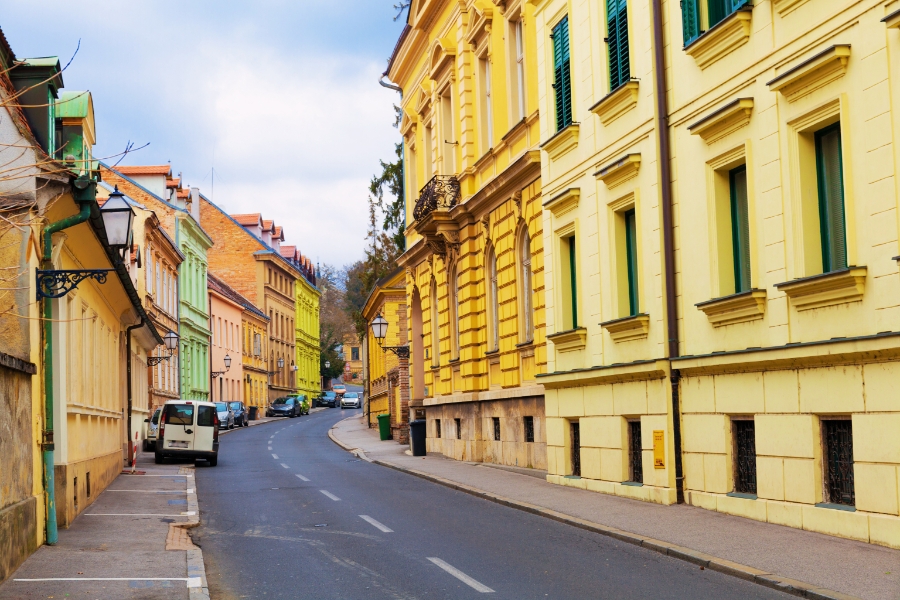
Walking through Upper Town feels like stepping back in time. The star attraction is St. Mark’s Church, famous for its colourful tiled roof, which displays medieval coats of arms. Not far away, the Stone Gate contains a cherished chapel dedicated to the Virgin Mary, whose painting survived the great fire of 1731. One of the most charming details you’ll notice is there are over 200 gas lanterns still lit by hand each evening, giving the streets a warm, old-world glow that few European capitals can match.
Directly below the hills of the old town stretches the Lower Town, or Donji Grad. This is Zagreb’s lively city centre, developed in the late 19th and early 20th centuries. Designed during the Austro-Hungarian period, the district follows a graceful grid of broad boulevards, ornate façades, and grand public buildings.
At its heart lies the Lenuci’s Green Horseshoe, a U-shaped chain of parks and squares that creates one of Europe’s most charming urban green belts. Stroll through Zrinjevac with its music pavilion, admire colourful flower beds, or relax beneath the shade of old trees.
Architecturally, Donji Grad showcases Austro-Hungarian elegance and neoclassical grandeur. Highlights include the Croatian National Theatre, a glowing yellow belle-époque masterpiece; the Art Pavilion, crowned with its distinctive dome; and the Glavni Kolodvor (Main Train Station) overlooking King Tomislav Square. The area is also rich with museums, from the Archaeological Museum to the Mimara Museum and the Ethnographic Museum. Even its streets hide surprises such as the glass-roofed Oktogon Passage or the historic Grič Tunnel, now used for exhibitions and events.
Beyond architecture, Lower Town is the centre of Zagreb’s café culture and everyday life. Locals love lingering over coffee, especially around Flower Square or along Bogovićeva Street, where terrace cafés line the pedestrian avenues.

Kaptol is located east of the Upper Town. It's the city’s religious and historic core that developed around Zagreb’s grand cathedral. The twin spires of the Zagreb Cathedral, a magnificent neo-Gothic structure and the tallest building in Croatia, dominate its skyline.
Though its origins date back to the medieval era, the cathedral was rebuilt after the 1880 earthquake in its current ornate style, complete with intricate stonework and soaring towers visible from across Zagreb. Visitors are welcome to step inside to admire the stained glass, altars, and peaceful atmosphere.
Kaptol is also home to the Dolac Market, the city’s busiest open-air market. Every morning, farmers and vendors fill the square with fresh produce, meats, cheeses, flowers, and handmade goods. Beneath the upper level, a covered market houses fishmongers and butchers. Even if you’re not shopping, you can taste seasonal fruit, sample local cheeses, or pick up a freshly baked strudel.
As you explore Kaptol’s surrounding streets, you’ll find houses and manors that date back centuries. In the evenings, traditional street lamps cast a gentle glow, extending the historic atmosphere from the Upper Town. At the same time, Kaptol has cosy wine bars, local taverns, and restaurants tucked into side streets, offering Croatian wines and regional dishes.
For a complete picture of Zagreb, venture across the Sava River to Novi Zagreb (“New Zagreb”). This is the city’s modern, post-war side, developed in the mid-20th century during the Yugoslav era. Built across the flat plains south of the river, Novi Zagreb is characterised by broad boulevards, expansive residential blocks, and urban planning typical of socialist architecture.
Many neighbourhoods were designed to ease housing shortages, resulting in long rows of concrete apartment buildings separated by open communal spaces. One of the most famous complexes, Mamutica, is the largest apartment building in Croatia, housing around 5,000 residents in a single colossal block.
Walking through Novi Zagreb offers a glimpse of everyday local life. Children play in shared courtyards, laundry hang from balconies, and colourful street art soften the grey facades. It’s a quieter, residential side of the city.
Novi Zagreb’s appeal lies more in culture and recreation than in historical landmarks. The district’s standout attraction is the Museum of Contemporary Art (MSU). Its sleek, minimalist design and wide array of contemporary Croatian and international works make it a must-visit for art lovers. One highlight is the external spiral slide that visitors can actually ride. Bundek Park is a beautifully maintained green space built around two small lakes near the river. There are walking paths, lakeside lawns, playgrounds, and frequent open-air events in summer.
A visit to Novi Zagreb also helps you understand how the city expanded in the 20th century. The vibe here is more suburban and spacious, with wide avenues, major shopping centres, and sports and concert hall.
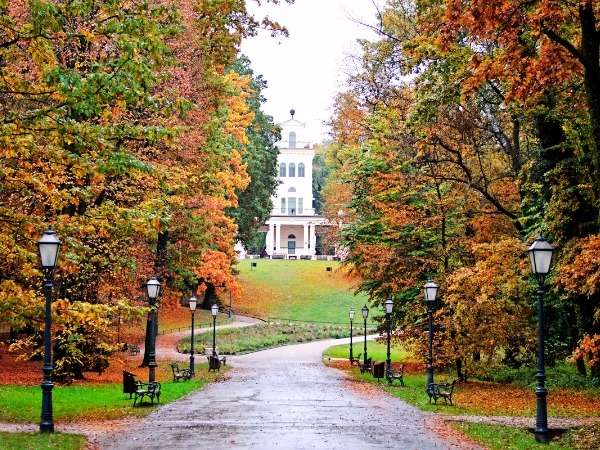
Maksimir is one of the best neighbourhoods in Zagreb for nature lovers. Located in the east of Zagreb, this area is centred around Maksimir Park (Maksimirski perivoj), a vast, leafy landscape. It was designed in the romantic style of an English garden, and it was originally created as a “garden for the people.” It covers over 300 hectares, filled with winding paths, bird song, and shady groves.
Inside the park, you’ll find several charming features. The Bellevue Pavilion, often called the kiosk, offers lovely views over one of the larger lakes. Hidden among the trees are pavilions, statues, and even the occasional peacock call drifting from the Zagreb Zoo. Maksimir’s five serene lakes add to the area’s beauty. Don’t miss the Echo Pavilion, a round structure where your voice playfully bounces back at you when you speak at the centre.
Beyond the park, the neighbourhood is also home to Maksimir Stadium, the historic football ground of GNK Dinamo Zagreb. But for most visitors, the true appeal of Maksimir lies in its natural tranquility. After a busy day exploring Zagreb’s museums, markets, or old-town streets, an hour or two in Maksimir offers the perfect reset.
To experience everyday Zagreb away from the main tourist routes, head to Trešnjevka, a large western district that is full of local life and community spirit. Throughout the 20th century, Trešnjevka evolved into a working-class neighbourhood known for its modest homes, workshops, and later the low-rise apartment buildings built for factory workers. It also picked up the nickname “Red Trešnjevka” due to its socialist heritage and the famously symbolic red cherry.
The factories are long gone, and modernisation is slowly reshaping parts of the district. A highlight of the neighbourhood is the Trešnjevka Market (Trešnjevački plac), one of the city’s biggest open-air markets. Beneath its sea of red parasols, vendors sells seasonal fruits and vegetables, cheeses, meats, herbs, flowers, and homemade specialties.
Around the market, you’ll find cosy cafés, bakeries serving warm burek, and small shops selling everything from kitchenware to fresh pastries. Trešnjevka also offers a taste of Zagreb’s community culture. The neighbourhood has small, family-run restaurants serving traditional Croatian dishes, old-school pekara bakeries, ćevapi grills, and a local cultural centre that hosts art shows and a children’s theatre.
Zagreb’s richness comes from the diversity of its neighbourhoods, offering plenty of inspiration if you’re wondering where to go in Zagreb. To experience the city fully, mix and match different districts during your visit, balancing iconic landmarks with lesser-known local spots for a more authentic feel.
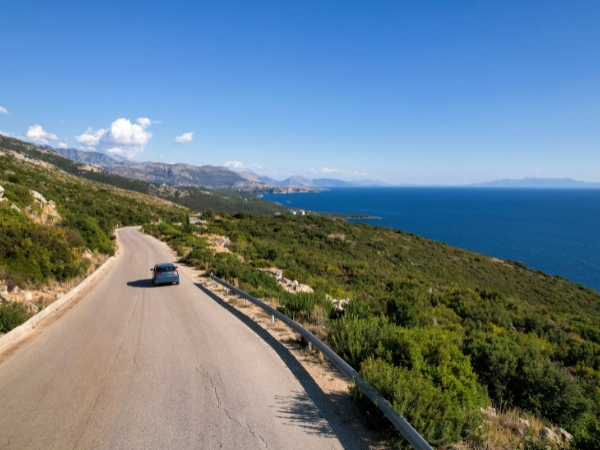
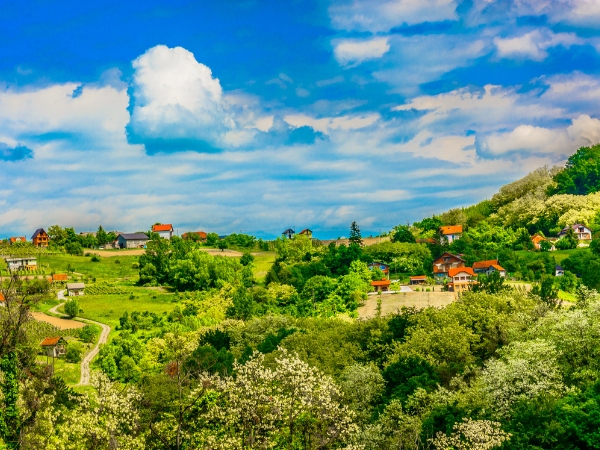
If you ever feel adventurous beyond the city limits, rent a car at Zagreb Airport with Final Rentals. With Final Rentals, exploring Zagreb and its surroundings is convenient. Choose your pickup location, select a vehicle, and receive instant confirmation. Having your own car makes it easy to visit nearby nature parks, historic towns, and scenic countryside.
Book, manage, and enjoy your car rental at any time. Download the Final Rentals app on Google Play and the App Store.