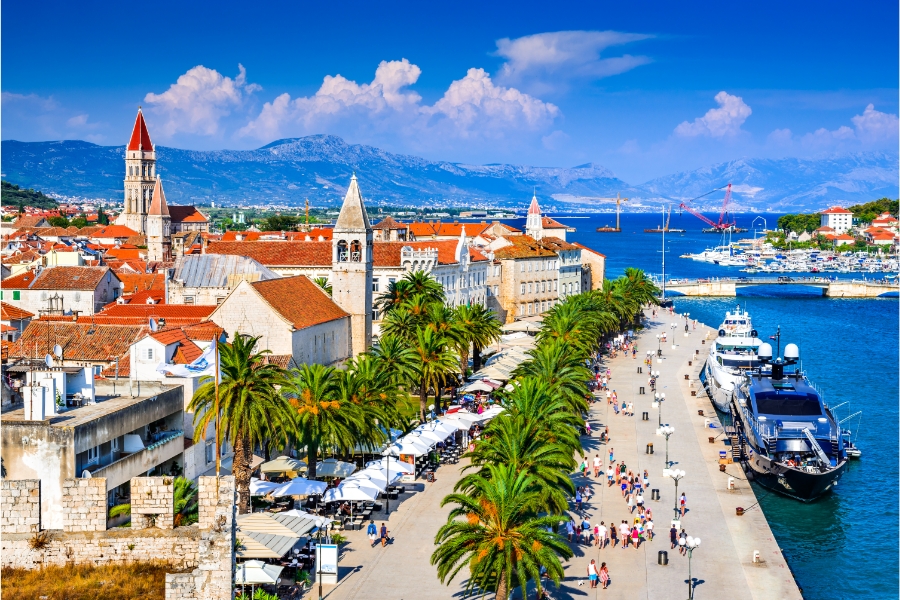
Travelling between Dubrovnik and Split is one of the most popular routes in Croatia. Flights and buses are faster, but they skip the small coastal towns, viewpoints, and beaches that are off the main tourist path. That’s why many travellers opt for car hire at Dubrovnik Airport and follow the Adriatic Highway north.
Driving allows travellers to stop where the scenery changes, explore historic seaside towns, and travel at a relaxed pace rather than rushing between cities. This guide focuses on how to plan the drive, the best places to stop, and how to plan your journey so it feels like a road trip rather than just a transfer.
The drive from Dubrovnik to Split covers about 230 kilometres (about 143 miles). The drive usually takes 3 to 4 hours, depending on the route you choose and traffic conditions. While it’s possible to do the journey in a single day, you’ll find it more enjoyable when spread over 2 days with coastal stops, viewpoints, and short detours along the way.
There are two main route options. The most scenic choice is the D8 coastal road, a two-lane highway that hugs the Adriatic coastline. It’s slower than the motorway but offers constant sea views, charming towns, and photo opportunities, and there are no tolls. The faster alternative is a combination of the A1 motorway and the Pelješac Bridge. This route is multi-lane and significantly quicker. However, it involves tolls and bypasses much of the dramatic coastline.
If you use the Pelješac Bridge, there are no border crossings at all. Without it, the coastal route briefly passes through Bosnia and Herzegovina near Neum, which involves two short border checks. The route can be driven in either direction, from Dubrovnik to Split or vice versa. You can also drive southbound from Split to Dubrovnik, so the sea is on the right-hand side, making it easier to pull over for viewpoints and photos.
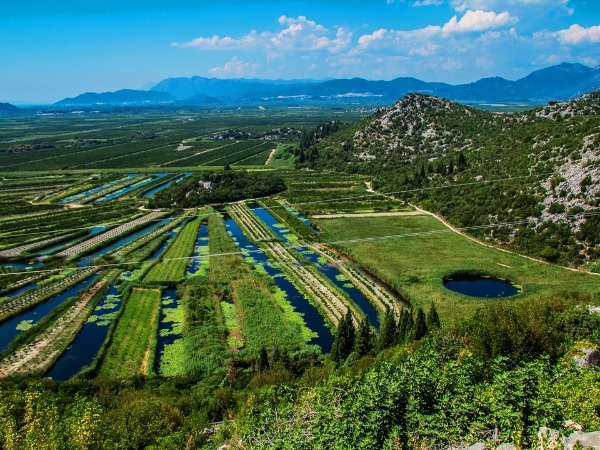
There are a couple of ways to drive from Dubrovnik to Split, each with its own advantages.
The Coastal Route (D8 Adriatic Highway) is the classic choice for travellers who want scenery over speed. This drive closely follows the shoreline, with turquoise water on one side and rugged mountains on the other. You pass seaside villages, viewpoints, and beaches that invite frequent stops. The road is narrow and winding, so driving is relaxed rather than fast, often around 50 to 80 kilometres per hour. That slower pace of this Adriatic coast road trip is part of the appeal. In peak summer, traffic can be heavy, and the drive may take 5 to 6 hours.
If you want speed and comfort, the A1 motorway is the fastest way to travel between Dubrovnik and Split. This modern inland highway lacks coastal views but allows smooth driving at up to 130 kilometres per hour. After a short local stretch from Dubrovnik, you join the A1 near Ploče and head northwest toward Split. The road is multi-lane, well-maintained, and includes regular service areas for fuel and rest breaks. Without heavy traffic, the journey takes under 3 hours. Tolls apply, usually around 8 to 12 euros for a standard car. You can always take a brief break to visit coastal towns if time allows.
For years, coastal drives between Dubrovnik and Split required passing through Neum, Bosnia and Herzegovina’s short coastline. This meant two border checks and possible delays, especially in summer.
Drivers needed passports and rental permission for cross-border travel. Since the opening of the Pelješac Bridge, this crossing is no longer necessary. Most drivers now avoid Neum entirely. However, the original route is open if needed. The crossing is usually quick, fuel can be slightly cheaper, and Neum has a few seaside restaurants.
One of the greatest joys of a Dubrovnik to Split road trip is the number of interesting places you can visit on the way. Rather than rushing, plan some time to explore a few of these gems. Below are the best stops between Dubrovnik and Split along the coastal route.
Your journey begins in Dubrovnik, often called the Pearl of the Adriatic, and it sets the tone for an unforgettable Adriatic coast road trip. Before departing, take time to enjoy a final panoramic view of the city. Mount Srđ offers a breathtaking view of the old town and the islands. Meanwhile, the Franjo Tuđman Bridge provides an easy roadside stop with harbour views. Before leaving, fuel up just outside the city and set your navigation for the D8 heading northwest.
About 24 kilometres north of Dubrovnik, Trsteno Arboretum makes a peaceful and rewarding stop. Dating back to the 15th century, it is one of the oldest Renaissance gardens in Europe. It is known for its ancient plane trees, exotic plants, and sea-facing terraces. Walking beneath the massive trees is both calming and impressive, and the Neptune fountain and shaded pergolas add to the charm.
Continuing north, the turn off for the Pelješac Peninsula leads to one of the most scenic rural areas in southern Dalmatia. Crossing the Pelješac Bridge is a highlight, with wide views over the sea and islands. The peninsula is known for vineyards, quiet villages, and a slower pace of life. Even a brief drive reveals rolling hills, stone houses, and coastal coves that are far from busy highways. If you have time, stop at a local winery or traditional tavern.
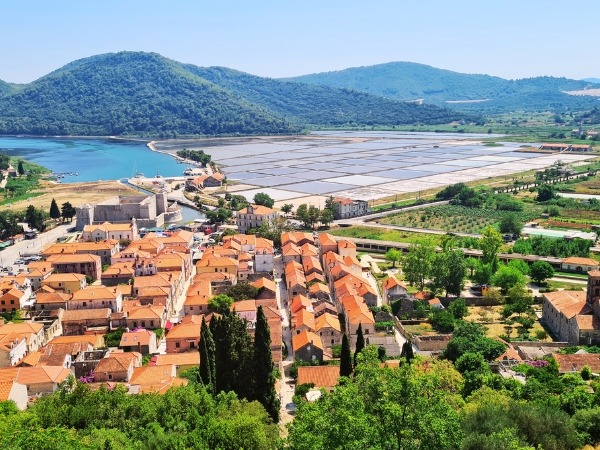
Around 55 kilometres from Dubrovnik, Ston and Mali Ston offer a mix of history and food culture. Ston is famous for its medieval walls, which stretch across the hills in a zigzag and offer views of the town and bay. Nearby salt pans, still in use today, reveal how important salt production once was. Mali Ston, just along the coast, is renowned for oysters farmed in the sheltered bay. Fresh oysters are served in local restaurants, often moments after being harvested.
The Makarska Riviera is often considered one of Croatia’s most beautiful coastal stretches. Running for about 60 kilometres, it combines turquoise water, pebble beaches, and the rise of the Biokovo Mountains just inland. Towns such as Makarska, Tučepi, and Podgora line the route, each offering access to clear water and lively promenades. Makarska is a good place for a longer pause, with cafes, a harbour walk, and a compact old town.
At the northern end of the Makarska Riviera, Brela and Baška Voda are known for some of the region’s finest beaches. Brela’s Punta Rata Beach is especially famous, with clear water, pine shade, and the Brela Stone just offshore. The scenery here offers turquoise bays framed by greenery and mountains. Baška Voda is livelier, with a busy waterfront, shops, and cafes. Meanwhile, Brela is quieter, stretching along the shore. Both towns are easy to explore on foot.
Just 25 kilometres before Split, Omiš is located where the Cetina River meets the sea, cutting a deep canyon through steep cliffs. Its setting is reinforced by a history tied to pirates and fortresses. The contrast between the green river, the blue sea, and the grey rock is striking. Omiš also offers sandy beaches. For panoramic views, a short but steep walk leads to the Mirabella Fortress above town.
With so many potential stops and detours, it’s wise to plan your route according to your interests and schedule. Here are some tips to help you plan a smooth and enjoyable journey:
The trip from Dubrovnik to Split showcases the best of Croatia’s Adriatic coast in one concentrated route. Over the course of a few hundred kilometres, you’ll experience an incredible diversity of landscapes and sights. You’ll start in the UNESCO grandeur of Dubrovnik’s Old Town and end in the bustling Roman-era cityscape of Split.
Rent a car in Dubrovnik with Final Rentals to start your journey along the Dalmatian coast. With Final Rentals, booking a car online is fast and simple. Select Dubrovnik Airport as your pickup location, enter your travel dates, and choose a vehicle for your trip. Book and manage your car rental at any time. Download the Final Rentals app on Google Play and the App Store.