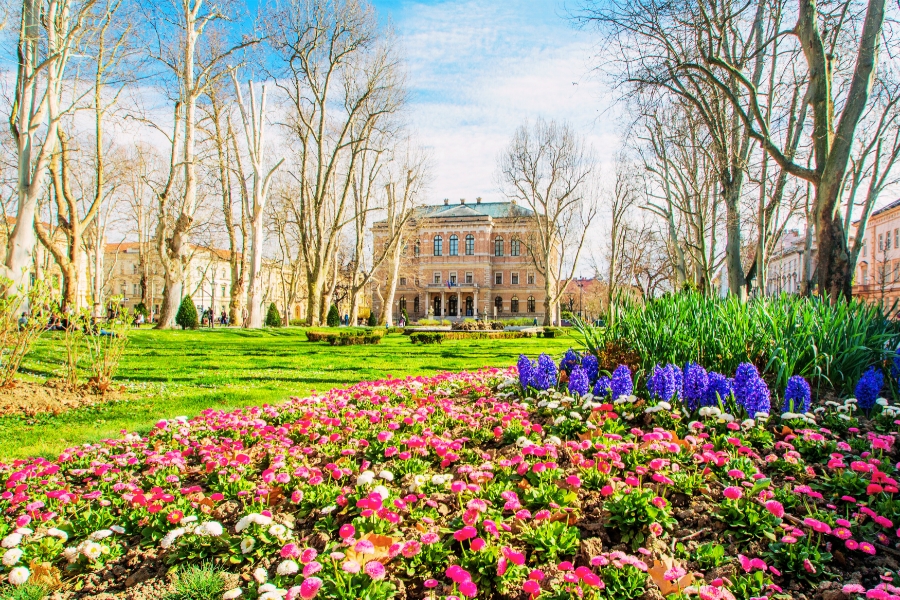
Zagreb’s Green Horseshoe is a famous U-shaped sequence of parks and squares in the city’s Lower Town. It’s an ideal route for first-time visitors who want to enjoy relaxing walks in Zagreb while discovering historic architecture and lush greenery. For those planning day trips beyond the city, renting a car in Zagreb can be a convenient option. In this guide, we’ll show you how to explore all the highlights of the Green Horseshoe, from elegant 19th-century parks to grand museums and monuments.
A masterpiece of late 19th-century urban planning, the Green Horseshoe is one of Zagreb’s most iconic landmarks. It consists of seven connected squares arranged in a U-shape, plus a botanical garden, all located in the city’s central district (Donji Grad). Think of it as one continuous park made up of smaller parks and plazas, each named after an important figure in Croatian history.
Together, they form one of the best parks in Zagreb for leisurely strolling, relaxing, or enjoying the city’s cultural atmosphere. Designed by urban planner Milan Lenuci, the Horseshoe was created to bring nature into the heart of the city, and it remains a proud symbol of Zagreb’s blend of Austro-Hungarian elegance and public spaces.
Walking the entire route is easy and enjoyable. Strolling from one end to the other takes only a couple of hours. Along the way, you’ll encounter ornate fountains, colourful flower beds, and statues celebrating national heroes. The Green Horseshoe is also a paradise for photographers, offering some of the finest photography spots in Zagreb, from tree-lined promenades to impressive buildings like the Croatian National Theatre.
All the squares of the Green Horseshoe are right next to each other in the city centre. Wear comfortable shoes, take your time, and enjoy the atmosphere. Along the route, you’ll find benches, cafés, and ice-cream stands where you can pause and soak in the surroundings.
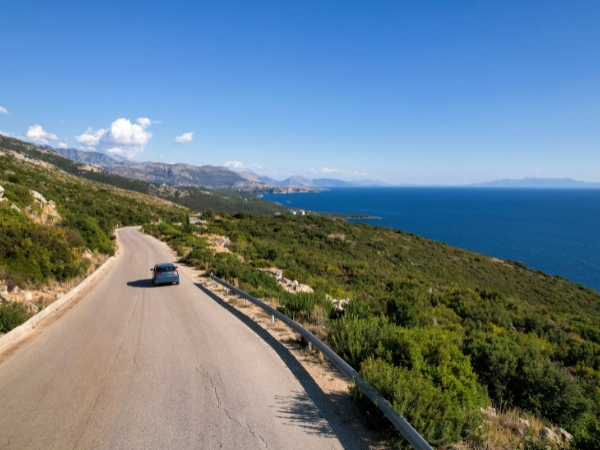
That said, if you’re short on time or staying farther from the centre, you may want to rent a car in Zagreb for flexibility. Having your own vehicle allows you to reach the Green Horseshoe early in the day and explore the city at your own pace. There are convenient parking areas near downtown, including spaces by the Main Train Station and nearby public garages, where you can leave your car before beginning your walk. A rental car is also useful if you plan to continue on to other attractions beyond the Horseshoe later in the day. Driving in Zagreb is generally straightforward. Just be mindful of one-way streets and local parking regulations.
Now we will explore each part of the Horseshoe. The route typically starts at the northern end, loops around, and finishes at the opposite side of downtown. Each subsection below covers a single square or park, including its location, history, and notable architectural or natural features. Although Marulić Square and Mažuranić Square are directly interconnected and form a continuous green area, they will be discussed separately. You can follow this order whether you are walking or making short hops by car.
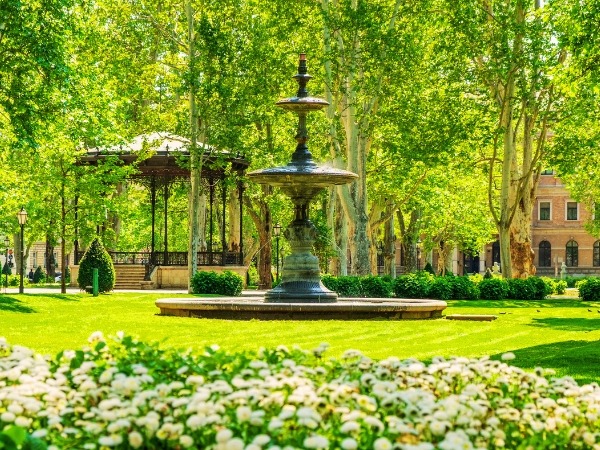
Zrinjevac is a postcard-perfect park and one of the most beloved green spaces in central Zagreb. Locals simply call it Zrinjevac, though its full name honours Nikola Šubić Zrinski, a 16th-century Croatian nobleman. The square unfolds as a long, tree-lined promenade with a romantic, old-world charm. Rows of grand plane and oak trees provide cool shade, making it ideal for a slow stroll, quiet reading, or a picnic on the lawns. At its centre stands the elegant wrought-iron music pavilion from 1891, which still hosts live classical and jazz performances on warm evenings.
As you wander through the park, you’ll notice ornate fountains and the historic meteorological column from 1884, still displaying temperature and pressure after more than a century. Busts of noted Croatian figures dot the pathways. Zrinjevac is a favourite gathering place. During Advent, the park transforms into a winter wonderland filled with lights, music, and festive stalls. Zrinjevac is just a block from Ban Jelačić Square.
Strossmayer Square is the next green oasis on the horseshoe beside Zrinjevac. This tranquil square is named after Bishop Josip Juraj Strossmayer, a major 19th-century Croatian cultural figure and patron of the arts. At its centre stands a bronze statue of Strossmayer, created by the sculptor Ivan Meštrović.
The square is a grassy, tree-lined park framed by elegant 19th-century palaces. On the western side rises the Croatian Academy of Sciences and Arts, a grand neoclassical building that houses the Strossmayer Gallery of Old Masters, founded in 1884. Inside is a notable collection of European paintings from the 14th to 19th centuries. Even from the outside, the Academy’s façade enhances the square’s refined, Central European character. Opposite it, more historic buildings with ornate pastel façades complete the picturesque setting.
King Tomislav Square (Trg kralja Tomislava) is a wide, open park space that acts as a grand gateway to Zagreb’s Lower Town. Located directly in front of the Main Train Station (Glavni Kolodvor), it’s often the first green area visitors see when arriving by rail. At its centre stands the impressive equestrian statue of King Tomislav, Croatia’s first medieval king. The bronze sculpture shows him on horseback holding a scepter.
The square is a long rectangular lawn lined with walking paths. In summer, you’ll often see travellers pausing here with their luggage after stepping off the train. In winter, the square becomes a festive ice-skating park during Advent season. It is complete with lights, music, and a large outdoor rink. At the northern end of the square stands the Art Pavilion (Umjetnički paviljon), a striking yellow landmark topped with a decorative dome and glass roof. This leads into the next section of the Green Horseshoe.
The Art Pavilion in Zagreb is one of the city’s most iconic cultural landmarks, and it is essentially part of King Tomislav Square. The pavilion is a magnificent late 19th-century exhibition hall known for its sunshine-yellow façade and elegant architectural detailing. Architects Fellner and Helmer created the present structure around that frame. When it opened in 1898, it became the oldest purpose-built exhibition gallery in Southeast Europe.
Architecturally, the pavilion is a fin-de-siècle masterpiece, with an ornate dome, arched windows, and decorative stucco elements. Inside, the grand central hall hosts rotating art exhibitions featuring Croatian and international artists. Even if you don’t visit an exhibition, the building is worth admiring from the outside. Its façade includes graceful sculptures and intricate motifs. At night, the pavilion is often beautifully illuminated.
In front of the pavilion, the fountain and surrounding flower beds make the area especially photogenic. The view of King Tomislav’s statue with the Art Pavilion rising behind it is one of the classic photography spots in Zagreb. From this vantage point, you can look straight across the square toward the Main Train Station. From the Art Pavilion, the next stop on the Green Horseshoe is the Botanical Garden, just a short walk to the west. Cross the small street or tram line toward the cluster of trees and greenery.
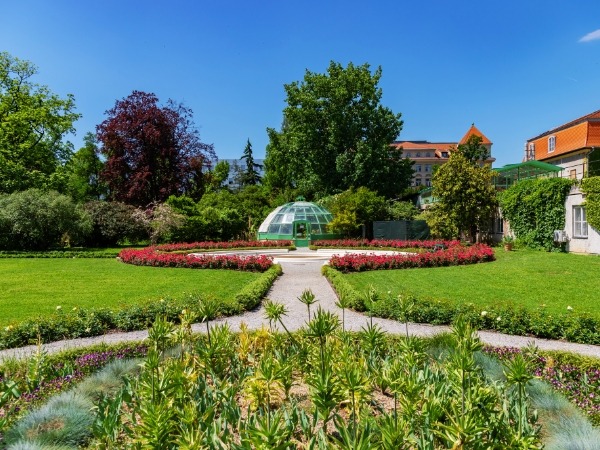
The Botanical Garden (Botanički vrt) forms the bottom of the Green Horseshoe, connecting its eastern and western arms. Established in 1889 by the University of Zagreb’s Faculty of Science, it is the oldest university botanical garden in Croatia and is protected as a monument of landscape architecture. It is home to around 5,000 plant species, including hundreds of exotic and indigenous varieties. About 300 of them protected or rare.
As you stroll the pebbled paths, you’ll encounter flower beds, arboretums, and charming rock gardens. One of the highlights is the ornamental pond at the centre, complete with water lilies and a quaint wooden bridge. This tranquil corner is often visited by sunbathing turtles and surrounded by birdsong. The garden also features a Victorian-style greenhouse, occasionally open for special exhibitions. Many of the trees and shrubs are labelled.
The Botanical Garden is free to enter during daylight hours. However, access may be limited in winter. Geographically, the garden acts as the base connector of the horseshoe, linking King Tomislav Square to Marulić Square on the western side. When you exit through the northwest gate, you’ll step directly into Marulić Square, right beside the imposing Croatian State Archives building.
Marulić Square is a graceful green square named after Marko Marulić, a celebrated 15th-century Croatian poet and humanist. Its most striking feature is the Croatian State Archives building, which dominates the landscape. Initially constructed in the early 1900s as the National and University Library, this landmark is considered one of the finest Art Nouveau buildings in Croatia. Its grand portico, massive columns, stained-glass windows, and distinctive owl sculptures perched on the roof make it a favourite subject for architecture lovers. The building’s pale façade and green dome stand out beautifully against the greenery.
The park area of Marulić Square is landscaped with lawns, pathways, and flower beds. A small fountain and several benches sit in front of the Archives. In spring, blooming tulips and colourful plantings perfectly frame the architecture of the Archives. Marulić Square marks the beginning of the western leg of the Green Horseshoe. It is beside the Botanical Garden, so as soon as you emerge from the garden’s northwest exit, you step right into this square. Nearby, there's the modern Faculty of Law campus. When you continue north, the green landscape flows into Mažuranić Square.
Mažuranić Square is a compact yet charming green space named after Ivan Mažuranić, a 19th-century Croatian poet and politician. Like the other squares of the Green Horseshoe, it has a peaceful patch of lawns, trees, and walking paths. What gives this square its distinctive character is the striking Ethnographic Museum, housed in an elegant Art Nouveau palace designed by architect Vjekoslav Bastl.
Its façade, crowned by a grand central turquoise dome, showcases intricate decorative motifs that blend Western architecture with subtle oriental influences. As you approach the entrance, you’ll notice two graceful caryatid sculptures flanking the doorway. The Ethnographic Museum is both an architectural and cultural treasure. Its white exterior contrasts beautifully with the greenery of the square. If you venture inside, you’ll find a collection of folk costumes, traditional crafts, and cultural artefacts from Croatia and beyond.
Mažuranić Square has a relaxed, local atmosphere. You might spot residents walking their dogs, students taking breaks between classes, or passersby sitting on a bench under the chestnut trees. It’s less crowded than the Zrinjevac. When you’re ready to continue your walk, head north. The yellow Croatian National Theatre soon appears in view, signalling your arrival at the final stop of the Green Horseshoe.
Republic of Croatia Square (Trg Republike Hrvatske) is the grand finale of the Green Horseshoe, marking its northwestern end. Formerly known as Marshal Tito Square, it has been renamed to reflect Croatia’s national identity. This square is one of Zagreb’s cultural powerhouses, dominated by the magnificent Croatian National Theatre, a neo-Baroque masterpiece built in 1895.
With its sunny yellow façade, elegant portico, and distinctive green domes, the theatre is one of the city’s most recognisable landmarks. Walk around the exterior to admire the intricate allegorical sculptures and refined architectural details. If the foyer doors are open during the day, you can step inside for a glimpse of its lavish interior. Fronting the theatre on the square’s lawn is the celebrated Well of Life, a bronze fountain by renowned sculptor Ivan Meštrović.
Depicting a circle of figures reaching toward the water, it’s considered one of his finest works and a popular photo spot. Nearby stands another Meštrović sculpture, History of the Croats, a stylised torso symbolising the nation’s cultural heritage. Surrounding the park are major institutions. The Museum of Arts and Crafts, with its grand historic façade, and the strikingly modern Music Academy, whose blue-glass exterior adds a contemporary contrast.
As you stroll along the gravel paths or rest on the manicured lawns, take in the theatre’s fluttering Croatian flag, the sound of nearby trams, and the blend of architectural styles around you. Republic of Croatia Square completes your journey through the Green Horseshoe. From here, Zagreb’s pedestrian centre and the historic Upper Town are just a short walk away.
Exploring Zagreb’s Green Horseshoe in a day offers a balance of nature, history, and architecture. In just a few hours, you can explore eight different parks and squares. This route showcases why Zagreb is often praised as one of Europe’s greenest capitals. Take your time, breathe in the scent of the flowers, listen to the fountain waters and the occasional street music, and let the Green Horseshoe of Zagreb leave you with lasting memories.
Rent a car in Zagreb with Final Rentals and pick up your vehicle at Zagreb Airport. Final Rentals offers a wide selection of cars for different travel needs and budgets. The booking process is simple and provides instant confirmation. For extra convenience, you can also download the Final Rentals app on Google Play and the App Store.