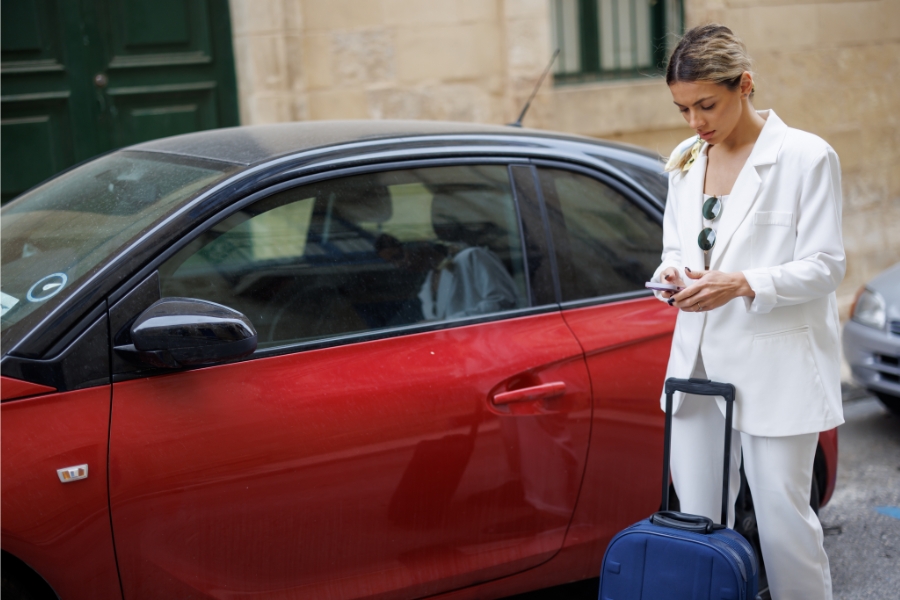
Renting a car in Croatia is perfect for coastal drives, island day trips, and reaching national parks. But you will need a checklist before driving away, because the handover and return process is where most misunderstandings happen.
The rental company typically compares the car’s condition at pickup and drop-off using a condition report, and small marks can incur costs if not recorded. Our guide helps you check a rental car in Croatia to avoid surprise charges.
When you check a rental car in Croatia, you are protecting yourself from unclear claims and unexpected costs. If you are parking near stone walls, squeezing into small parking spaces, or doing quick turns in an old-town street, a careful check helps you avoid later disputes about where that mark came from and protects your deposit.
The moment you pick your rental is the “baseline” condition for the whole contract. If you rush checking, you can miss a small chip or wheel scrape, and those are the things that may be flagged at return. To properly check a rental car in Croatia, give yourself time and do not feel pressured.
At busy airports, there is often a queue, staff may be moving fast, and you may feel pushed to sign quickly. Ask for about 10 to 15 minutes, move the car to a spot with better lighting if needed, and do your inspection before the main handover is “finished” on paper.

Most rental firms record marks on a diagram or a digital form and may charge by damage size and location, so you need photos that show both. Work top-to-bottom and left-to-right, and include close-ups plus a wider shot so the mark is easy to locate later. When you check a rental car in Croatia, consistency is what prevents missed damage.
In many Croatian coastal towns, the older parts have narrow lanes, stone kerbs, and tight corners. The most common marks are long, light scratches on doors, wheel-arch scuffs, and little dents from other car doors in crowded car parks. Your job is to look along the car’s side at an angle (not straight-on), because scratches show up better when light reflects across the panel.
Do not only check the driver’s side. The passenger side often faces walls or kerbs when you park, so it is a common place for “mystery” marks. If you see a scratch, photograph it close-up and then step back so the photo shows which panel it is on (front door, rear quarter panel, and so on).
If your trip includes motorways (like the A1 corridor) and faster roads, tiny stone chips on the bonnet and windscreen are a real possibility. Long drives on fast roads make small chips more likely because of speed and traffic flow.
Check the windscreen carefully from the driver’s seat and from outside. Look for small stars or half-moon chips near the edges, because these can grow into cracks with heat, cold, or vibration. If you find chips at pick-up, make sure they are marked clearly.
A lot of Croatia’s best places involve rural roads, hill villages, and car parks that are not perfectly smooth. Before you drive off, look at each tyre for cuts, bulges, or very low tread, and check that all tyres match the general condition you would expect for a rental (not one brand-new tyre next to an old one).
Also, confirm the spare wheel or tyre-inflation kit is present if the car is supposed to have one. Check tyre pressure warnings. If the car already has a low-pressure alert, you want that noted before you leave.
Bumpers collect scrapes from kerbs, steep ramps, and tight parking. Crouch down and look at the lower front bumper lip, the rear bumper corners, and the area under the number plates. These spots often hide scuffs that are hard to see when you stand up, especially if the car is dark-coloured.
For the undercarriage, you are not doing a mechanic’s inspection, but you can still look for obvious hanging пластиков pieces (like a loose splash guard) or deep scrapes under the front. If you plan to drive on uneven rural roads or enter very steep car parks, existing underside scrapes can be wrongly blamed on you later.
Interior checks are about function, safety, and matching what the contract says you received. Many disputes are not only about dents. They can include missing equipment, warning lights, or fuel level differences. It is also easier to solve problems while you are still at the desk. When you check a rental car in Croatia, the interior matters just as much as the exterior.
Croatian summers can be very hot, especially on the coast, and a weak system can ruin a long drive. Turn the air-conditioning on straight away and test it properly. Set it to the coldest setting, aim the vents at your face, and wait a minute to see if the temperature changes. Also test fan speeds and switching between face and windscreen vents.
You do not need an expensive built-in GPS, but you do need a plan that works when the mobile signal drops. If the car has built-in navigation, check that it turns on, accepts an address, and finds routes.
Before you move the car, turn the ignition on and look at the dashboard. Some lights should appear briefly and go off, but warning lights that stay on are the ones you care about. Pay attention to engine warnings, tyre-pressure alerts, battery, and anything red.
Fuel policies can be strict. Match the fuel gauge to what the paperwork says you got. Take a photo of the fuel gauge at pick-up, and keep it with your other photos, because “it was not full” is a common disagreement at return. Also, confirm what type of fuel the car uses (petrol or diesel) and where the fuel cap release is.
This step is essential when you check a rental car in Croatia and want to avoid rental car charges in Croatia. Use photos, a video, a visible timestamp, a simple checklist routine, and a clear staff signature (or written confirmation).
Take photos before you drive away, ideally while the car is still in the pick-up area. Photograph each side of the car, then take close-ups of any marks. If your phone adds date and time automatically, that’s great. If not, turn it on or keep the original files unchanged so the details stay saved.
Do not forget the roof and the windscreen. A quick roof photo is useful because roof scrapes can happen in car parks with low beams, and windscreen chips are common dispute points.
A walkaround video captures where the mark is and how big it is compared to the whole panel. Start with the number plate, then circle the car once, pausing on any damage. If a staff member is present, ask them to confirm key marks so it is clear you raised them immediately.
This is also helpful for wheels. Many “new damage” claims are wheel scuffs, and video shows the full rim condition much better than one close-up photo.
Whether it is paper or digital, the condition report is what the company will compare at return. Make sure every scratch, dent, chip, and wheel scrape you found is marked clearly on the diagram or in the notes. If the sheet uses codes or symbols, ask what they mean so you can confirm the mark is recorded correctly.
Before you drive off, a few extra minutes checking your rental car in Croatia can save you hours of stress later. Stay calm, be thorough, and trust your own documentation over assumptions. When in doubt, take one more photo, ask one more question, and leave nothing unclear.
Rent a car in Croatia with Final Rentals to access a wide range of vehicles, from compact city cars to spacious SUVs, with transparent pricing and unlimited mileage. Select your pickup location, enter your travel dates, and choose a vehicle for your trip. Book and manage your car rental at any time. Download the Final Rentals app on Google Play and the App Store.
Take wide-angle photos of all sides of the vehicle, plus detailed close-ups of every visible scratch, dent, wheel, and windscreen. Include shots of the roof, bumpers, and fuel gauge at pick-up and return. Ensure the original files retain metadata (date and time), and consider adding a short walkaround video to strengthen your documentation.
Yes, but it carries a higher risk because you are not present during the inspection. To reduce the chance of disputes, take photos and a full video of the car at the drop-off location, capture the parking position, and document the exact time. Keep confirmation emails and receipts as additional proof.
Request full evidence, including photos, inspection reports, and repair invoices. Compare these with your own documented proof from pick-up and return. If the issue is unresolved, follow the company’s complaint procedure.