When choosing a transport option in Croatia, start with the places you actually want to visit. If your itinerary includes inland destinations or several stops, a car is usually more practical. Renting a car makes sense for national parks, villages, or a multi-region itinerary. Meanwhile, island-focused trips are easier by sea. So, the best choice depends on geography, not your holiday length. Our guide compares when driving or taking ferries makes more sense for different Croatian routes.
Croatia has motorways, state roads, and smaller rural routes linking major cities with inland attractions. Driving is useful when your stops are spread out, or direct public transport is limited. Motorway tolls apply on several routes, while parking can be limited around historic centres.

Istria has coastal towns and inland hilltop villages, so a car helps you visit both areas. You can drive from Pula or Rovinj towards Motovun and Grožnjan through vineyards, olive groves, and rural countryside. Local buses serve some areas, but their times may not match a multi-stop itinerary.
You can also make short detours to viewpoints, wineries, or smaller villages without rebuilding your day around timetables. Driving makes it easier to visit both coastal towns and inland areas during the same trip. Navigation is useful on smaller rural roads, especially when you leave the main routes. For this type of trip, a car is often the more practical transport option in Croatia.
Driving south from Zagreb is useful when Plitvice Lakes is part of a longer road trip. The park is about 132 kilometres from Zagreb and usually takes around 2 hours by car. Drivers can use the A1 towards Karlovac, then continue towards Plitvice on state roads.
After visiting Plitvice Lakes, you can continue south towards Zadar, Šibenik, or Split instead of driving back to Zagreb to skip unnecessary driving if your next stop is on the coast. You can also stop at Krka National Park near Šibenik before continuing farther south.
A car is useful when your schedule includes several inland and coastal stops within the same trip. You control each departure time and decide how long to spend at each place before continuing. The route also works well when you change hotels instead of returning to one city.

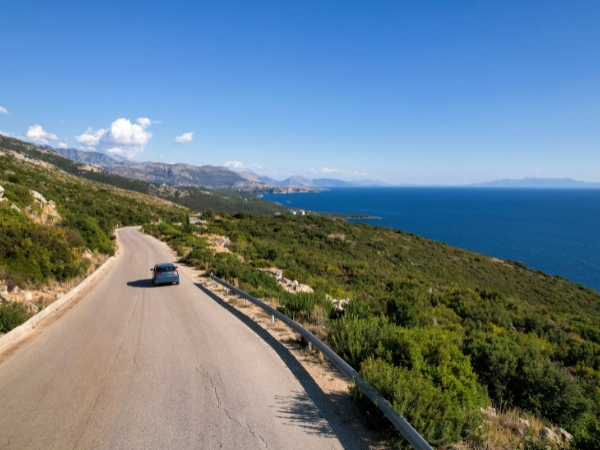
You can drive between Split and Dubrovnik using faster inland sections or more of the D8 coastal road. The coastal route takes longer, especially during busy summer periods. However, you can stop at Omiš, the Makarska Riviera, Baćina Lakes, and other coastal areas.
The Cetina canyon is inland from Omiš, while Baćina Lakes are near Ploče farther south. From Ploče, continue towards Pelješac, then cross the bridge and visit Ston before reaching Dubrovnik.
The Pelješac Bridge keeps the standard road journey between Split and Dubrovnik within Croatia. You can avoid the Neum crossing into Bosnia and Herzegovina on this route. You can also pause at viewpoints or spend longer around Ston and Pelješac. For a stop-heavy coastal drive, a car is often the more useful transport option in Croatia.
A car is useful if your route includes Zadar, Trogir, Šibenik, Krka National Park, Primošten, and Split. Some parts of the journey use the A1 motorway, while others follow state or local roads.
You can spend part of the day in a coastal town, then continue inland or towards another hotel. Buses connect many larger destinations, but some side trips need extra changes or careful timing. Driving also makes it easier to adjust your routes when your itinerary includes several regions.
If you plan to rent a car in Croatia, you can book a car rental with Final Rentals. You can choose from compact cars or SUVs based on your route, luggage, and travel plans. Your booking also includes unlimited mileage, Collision Damage Waiver, Theft Waiver, and Third Party Liability.
A rental car is practical when you stay in countryside villas, rural guesthouses, or places far from regular bus routes. It also helps when you are carrying several suitcases, child equipment, or other travel gear.
Croatia has plenty of passenger and car ferry routes between mainland ports and the Adriatic islands. Ferries are often practical when most of your trip stays along the coast or includes several islands. Fast passenger services and car ferries use different ports, so check the route carefully before booking. There are more departure times during summer. For an island-focused trip, ferries can be a practical transport option in Croatia.
Split is a useful base when your trip focuses on nearby islands. Passenger ferries connect Split with Hvar Town, while car ferries serve other island ports. A seasonal direct passenger service to Hvar can take about 1 hour and 5 minutes.
The car ferry from Split to Supetar on Brač takes about 50 minutes. Services to Stari Grad take roughly 1 hour and 50 minutes to 2 hours. The Split to Vis car ferry takes around 2 hours and 20 minutes. Some fast passenger services connect Split with Bol, Hvar, and Vis during warmer months. Fast passenger boats do not carry cars, unlike the main car ferry routes. Check the island port you actually need before choosing your sailing.

Seasonal passenger ferries can link Split, Hvar, Korčula, and Dubrovnik along one southbound route. You can follow a linear route without returning to Split after each island. Such an itinerary is useful when your accommodation changes from one port to the next.
Seasonal ferries connect Hvar with Korčula, with onward services available towards Dubrovnik. Schedules change throughout the year, so check your travel date before planning close connections. Travelling this way also means you can move between islands without returning to the mainland. If island hopping is your main focus, ferries can be a practical transport option in Croatia.
Zadar gives you access to nearby Ugljan and the longer island of Dugi Otok. Passenger boats from central Zadar reach Preko on Ugljan in about 25 minutes. A separate car ferry from Gaženica also reaches Preko in about 25 minutes. Car ferries from Gaženica to Brbinj on Dugi Otok take about 1 hour and 40 minutes.
Staying in one hotel in Split can make island day trips straightforward. Seasonal passenger ferries leave for destinations such as Hvar, Bol, and Vis. Morning and evening departures can give you enough time for sightseeing before returning to Split.
For a day trip, you also need to consider the port used by your chosen service. Hvar Town and Stari Grad are different arrival points on Hvar. Bol and Supetar are also in different parts of Brač. Choosing the wrong port can add local travel time after arrival.
Ferries make sense when your itinerary centres on waterfront towns and islands instead of inland attractions. When you arrive in Hvar or Korčula, historic streets are close by after you leave the port.
Dubrovnik is different because passenger ferries use Gruž Port, outside the Old Town. You need local transport afterwards to reach the historic centre. Seasonal sea links can still connect Dubrovnik with Korčula and Hvar without returning north by road.
When most of your itinerary follows the Adriatic, ferries can reduce unnecessary mainland travel. You can focus on harbours, beaches, and old towns instead. Sea routes are useful when you are changing islands rather than touring inland Croatia.
The best transport option in Croatia often depends on how many times you need to change location. A car can cut down on repeated transfers during multi-stop mainland trips, while ferries work better when your route follows ports in one direction. Before booking, compare the full journey between hotels, not just the travel time shown for each leg.
Rent a car in Croatia with Final Rentals to reach your mainland stops without returning to your original starting location. One-way rentals are available between selected Croatian locations, including Zagreb, Split, and Dubrovnik. Book and manage your car rental at any time. Download the Final Rentals app on Google Play and the App Store.
It depends on your route. If your trip includes Zagreb, Plitvice, Istria, or Krka, a car gives more control over your schedule. You can reach rural villages and national parks without relying on fixed departures. For coastal routes linking Split, Hvar, Korčula, and Dubrovnik, ferries are often more practical between major ports.
Rent a car if you plan to visit several regions or rural sites during one trip. A car is useful for national parks, beaches, villages, viewpoints, and inland stops. If your itinerary focuses on island hopping or a few coastal cities, ferries may be better. For stays centred on one or two towns, compare transport and day trips before deciding whether to book a car.
Main Croatian ferry routes are well established and regularly scheduled, especially during the summer season. Busy island connections usually have more departures in warmer months. Many major routes continue outside peak summer, although their frequency can drop. Smaller islands can have limited schedules, so check current departure times before booking hotels, onward transport, or same-day connections.