Finalrentals

Finalrentals Blog

A Traveller’s Guide to Dolac Market in Zagreb
All images used in this website, including all the blogs and blog section are created and obtained from a paid Canva Pro subscription. We do not intend to use any of this information commercially and it is solely for the purpose of knowledge and education of our visitors.

Published in Explore Category.

Dolac Market in Zagreb is often called the “Belly of Zagreb” by locals. It feeds the city’s appetite daily with fresh produce and local delicacies. Visiting this vibrant market is one of the top things to do in Zagreb if you want to experience local life and flavors. Conveniently, several car rental offices and pickup locations are available, so you can easily explore Zagreb and the surrounding region. In this guide, we’ll walk you through everything you need to know about Dolac Market, from its history and layout to what to buy and when to go.

What Is Dolac Market?

Dolac Market is the central farmers’ market in Zagreb and a beloved institution of daily life in the city. Simply put, it’s where you go to see Zagreb’s food culture in action. Located just above the main square (Ban Jelačić Square), Dolac is Zagreb’s most visited and best-known market, combining a traditional open-air market with red umbrella stalls and an indoor market hall below.

Dolac Market in Zagreb has a unique two-level layout. The upper level is an open square filled with dozens of stands selling fresh fruits, vegetables, flowers, and other produce. Here you’ll see the famous sea of red umbrellas, known as Šestinski umbrellas, which honor a local folk tradition.

Under these umbrellas, farmers from surrounding villages sell what they’ve grown or made. Just a few steps down, the lower level is a covered hall where you’ll find butchers, fishmongers, cheesemongers, and bakers offering meat, seafood, dairy, and baked goods.

Locals rely on Dolac Market more than supermarkets for several reasons. Firstly, the quality of produce is higher. Fruits and veggies are often picked just the day before, and you can smell the sweetness of ripe strawberries or the earthiness of mushrooms as you browse. Secondly, Dolac preserves Croatian food traditions. For example, in the indoor hall you’ll find older ladies selling sir i vrhnje, a local specialty of fresh cottage cheese and cream.

Upper Dolac Market vs. Lower Dolac Market

Dolac Market is essentially two markets in one. The Upper Market refers to the outdoor section atop the terrace, while the Lower Market is the indoor hall and surrounding ground-level areas under the terrace. Knowing the difference will help you navigate like a local. Here’s a closer look:

Upper Market

This is the heart of Dolac Market, the open air upper square instantly recognisable by its rows of bright red umbrellas. This section is devoted to fruits, vegetables, flowers, and fresh herbs, and it is the most vibrant and social part of the market. Locals often start their shopping here, and visitors are drawn in by the colour and energy.

Prices may be slightly higher than in supermarkets, but the reward is exceptional freshness. Most produce comes directly from nearby farms, and flavours are noticeably richer, whether it is a ripe tomato, a sweet fig, or freshly picked berries.

Seasonality defines the upper market. In spring, stalls overflow with wild asparagus, dandelion greens, young onions, radishes, peas, and the first strawberries of the year. Summer brings abundance, such as cherries, peaches, tomatoes, peppers, cucumbers, zucchini, melons, figs, and fragrant herbs like basil and parsley. Vendors proudly display overflowing crates, often cutting fruit to show ripeness.

Autumn transforms Dolac into a harvest scene, with pumpkins, squash, forest mushrooms, grapes, walnuts, and chestnuts, all in warm shades of gold and orange. In winter, the focus shifts to hardy vegetables such as cabbage, potatoes, onions, root vegetables, jars of honey, and an increase in cured meats and sausages prepared during traditional winter slaughtering.

Lower Market

Tucked beneath the lively upper square is Dolac’s lower market, an indoor hall filled with foods that benefit from cooler temperatures and permanent stalls. In one area, the salty scent of fresh Adriatic seafood dominates, while nearby the rich smells of cheese, cured meats, and dairy fill the air. This covered section is where you will find fish, meat, cheese, milk products, and some baked goods.

The fish section is one of the most surprising highlights, especially given Zagreb’s inland location. Fresh fish arrives daily from the coast, except Mondays, and stalls display sardines, anchovies, mackerel, and larger fish laid out on ice. On Friday mornings, when many locals eat fish, this area becomes busy.

Nearby, the butcher stalls offer beef, pork, lamb, poultry, and a wide range of homemade sausages. Many vendors have worked here for decades and source meat from local farms. Cheese and dairy counters are equally tempting, featuring Paški sir, fresh soft cheeses, butter, and thick cream, often with samples offered. Cured meat stalls display hanging pršut, smoked bacon, and regional salamis. A smaller bakery area sells bread, corn bread, and pastries such as burek or strudel, depending on the day.

How Locals Shop Dolac Market

For a truly local experience, it helps to understand how Zagrebians typically shop in Dolac. They usually start at the Upper Market and then finish in the lower hall. Early in the morning (especially on Saturdays), you’ll see locals weaving through the outdoor produce stalls with tote bags or wicker baskets in hand. They often have their favourite vendors, perhaps one farmer they trust for the freshest eggs, another for the best tomatoes.

Regulars might circle the upper square first, scoping out prices and quality, then circle back to buy from the stalls they prefer. After collecting fruits, veggies, and flowers up top, locals head downstairs to complete the rounds. This is where they’ll pick up meat, fish, or dairy if needed.

The flow usually ends at the far back of the indoor market where there’s often a section for odds and ends and homemade products. You might purchase locally produced honey, olive oil, dried fruits, or even a stall selling wine by the litre out of jugs.

What to Buy at Dolac Market

Dolac Market offers a cornucopia of foods and a few crafts, so knowing what’s best to buy can help focus your visit. Here we break down the must-buys in a few categories. Remember, all produce is local and seasonal, so the availability of some items will depend on the time of year.

Fresh Produce

If you buy nothing else at Dolac, choose the fresh produce. The market is known for locally grown fruit and vegetables delivered directly from nearby farms. What you see depends on the season, so buying what is in season gives better flavour and lower prices.

In summer, look for deep red tomatoes, sweet peppers, cucumbers, peaches, and plums. Autumn brings excellent apples, grapes, walnuts, and hazelnuts. Spring is the time for asparagus, young greens, and the first small but fragrant strawberries from around Zagreb. You may also spot foraged items such as wild garlic or porcini mushrooms, which are prized locally.

Before buying, walk around once to compare quality and prices. Friendly sellers who label goods as domaće usually indicate homegrown produce. Gently inspect items, which is normal here. Check berries for crushing, smell melons for sweetness, and enjoy the colour and freshness that make Dolac special for every visitor.

Cheese, Dairy, and Meat

Croatia has a strong tradition of cheese and meat, and Dolac Market is one of the best places to experience it. In the indoor dairy section, the standout product is Paški sir, a hard sheep cheese from Pag Island known for its sharp, nutty flavour. It is sold in small wedges and keeps well. You may also find Turoš, a bright orange dried cottage cheese from northern Croatia, as well as smoked cheeses and fresh cow milk cheese.

The meat section focuses on quality and tradition. Pršut is a popular choice and is easy to take away when sliced and wrapped. Other favourites include špek, a smoked bacon, and regional sausages such as kulen or garlic sausage. Fresh meat is also widely available, including beef, pork, lamb, and chicken. Most vendors prefer cash, and small quantities are welcome.

Baked Goods and Local Specialties

As one of the best markets in Zagreb, Dolac also offers plenty for a sweet tooth and edible souvenirs. Around the edges of the market and inside the covered halls, you will find bread and pastry stalls. A morning visit is the perfect time to buy fresh bread, whether a crusty white loaf, traditional corn bread that pairs well with cheese and cream, or regional options such as pogača.

Bakeries also sell burek with cheese or meat and classic strudels. A local favourite is bučnica, a savoury pumpkin and cheese strudel that is especially associated with Zagreb and well worth trying while browsing.

Dolac is also excellent for local food souvenirs. At the northern end of the upper market, stalls sell Croatian honey, including floral, sage, and pine varieties, often with samples. You will also see homemade jams and preserves, such as fig or plum, made from local harvests.

Another highlight is cold pressed oils, especially dark, nutty pumpkin seed oil from northern Croatia and high quality olive oil from the coast. These make practical gifts if bottles are well sealed. Some vendors sell rakija, the traditional fruit brandy, in flavours such as plum, honey, or herbs. While popular, remember airline restrictions if flying.

Cultural Landmarks Within Dolac Market

Dolac Market is also surrounded by little cultural landmarks. As you explore, keep an eye out for these notable spots.

Kumica Barica Statue

One of the first things you might notice when you climb up to Dolac from Ban Jelačić Square is this life-sized statue of a woman carrying a basket on her head. That is Kumica Barica, unveiled in 2006 as a tribute to all the “kumice,” the traditional market women who have kept Dolac supplied with fresh goods for decades.

Stone Steps (“Štefanjeve stube”)

Just as important as the statue are the stone steps that lead up to Dolac Market. Colloquially known as Štefanjeve stube, these stairs have been climbed by generations of shoppers and traders. They connect the busy modern city square below to the traditional market above. It’s said that before Dolac was built, the area had a maze of little streets and even a Capuchin monastery nearby. When the market was constructed, new stairs were made to handle the foot traffic

Views of Zagreb Cathedral

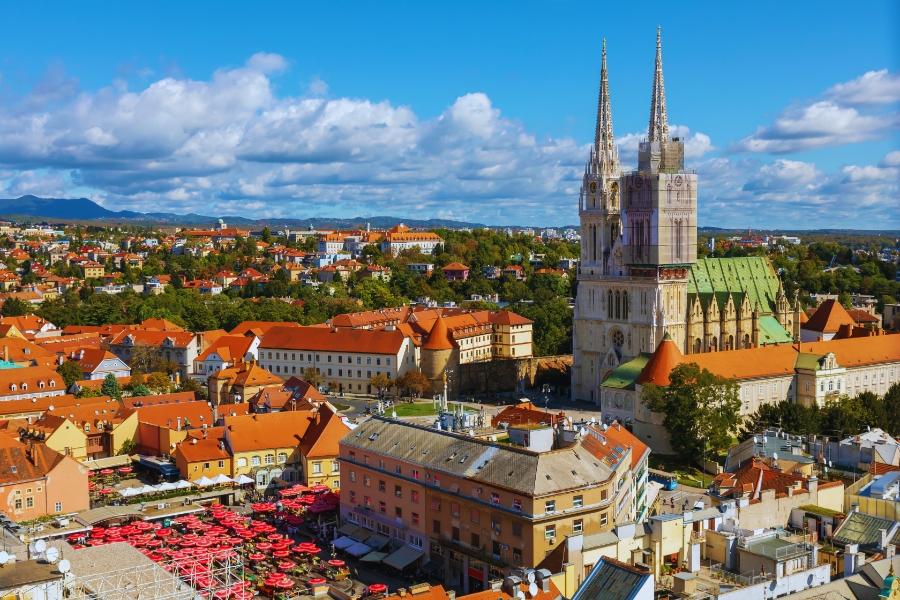
As you wander around Dolac, you’ll get a view of Zagreb Cathedral. The market’s open square has a backdrop of the twin gothic spires of the Cathedral of the Assumption of Mary (Zagreb’s Cathedral) rising just to the east. From certain angles in the upper market, especially near the flower stalls or if you stand on the eastern edge of the market square, you get a postcard-perfect shot of red umbrellas and fresh produce in the foreground and the towering cathedral in the background.

Best Time to Visit Dolac Market

Dolac Market is open daily, but timing your visit makes a big difference to what you’ll see and experience.

Opening Hours

Stalls usually start setting up around 6:30 AM. On weekdays, the market runs roughly until 2:00 PM, on Saturdays until about 3:00 PM, and on Sundays until around 1:00 PM. However, many outdoor stalls pack up earlier once they sell out, often by early afternoon. The indoor meat and dairy hall stays active slightly longer, but by mid-afternoon the market is largely quiet. For the full experience, mornings are essential.

Best Time of Day

Visiting between 7:00 AM and 10:00 AM gives you the freshest produce, the widest selection, and the most authentic atmosphere. Around 7 to 8 AM, the market is buzzing with locals, restaurant buyers, and regulars selecting the best goods. By 9 AM, it’s still lively but easier to navigate. Around 11 AM, you may find fewer stalls, though some vendors offer small discounts on remaining items. After noon, especially on weekdays, activity drops quickly.

Best Day of the Week

Saturday is the most vibrant and crowded day. Vendors bring their largest selection, and locals turn shopping into a social ritual. The energy is fantastic but busy. Weekdays are calmer and more relaxed, making them better for browsing or photography. Fridays are slightly busier due to fish purchases, while Mondays can be quieter. Sundays are a shorter, scaled-down version of the market.

Practical Tips for Visiting Dolac Market

To make your visit to Dolac Market as smooth and enjoyable as possible, here are some practical tips and etiquette pointers.

  • Bring cash (in Euros): Dolac Market is mostly cash-only. Although Croatia now uses euros and ATMs are nearby, many small vendors don’t accept cards. Bring small bills and coins (€5, €10). Prices are usually fixed, but buying larger quantities may earn small extras.
  • Mind your shopping manners: As a rule, touch produce only if you plan to buy it. At Dolac, vendors often prefer to select items for you. If you want to choose yourself, ask or gesture politely. It’s normal and meant to protect the produce, not discourage you.
  • Basic Croatian phrases for shopping: Even if many vendors speak some English, using a few Croatian words goes a long way. Simple greetings like Dobar dan (good day), molim (please), and hvala (thank you) are always appreciated. When ordering, say the quantity first, then the item, then molim. For example, “Jedan kilogram jabuka, molim” (one kilo of apples, please) or “Dvjesto grama sira, molim” (200 grams of cheese, please). If you’re unsure of the price, ask “Koliko košta?” (How much is it?). Vendors may reply in Croatian, but they’ll often show the price on a calculator.
  • Bargaining: Dolac isn’t a flea market, so bargaining is not really standard for individual food items. Generally, pay the listed price. However, if you’re buying a lot from one vendor, it’s okay to ask “Može malo popust?” (Can I get a little discount?) but often they’ll just automatically round down.

Takeaway

Dolac Market is more than just a place to buy groceries. It’s a living showcase of Zagreb’s everyday culture and community. By spending a morning here, you’ve looked into the heart and tasted what daily life is like for its residents. So, what’s next after Dolac? There are other neighbourhood markets to discover, each with its own vibe, or maybe you’ll venture out to vineyards and farms on the city’s outskirts.

If you’re keen, rent a car in Zagreb with Final Rentals and drive to nearby Zagorje or Samobor to continue your adventure in the countryside. With Final Rentals, booking a car online is fast and simple. Select Zagreb Airport or Zagreb Downtown as your pickup location, enter your travel dates, and choose a vehicle for your trip. Book and manage your car rental at any time. Download the Final Rentals app on Google Play and the App Store.