Dubrovnik’s Old Town is undeniably beautiful, but it can get crowded and overwhelming in peak season. If you’re looking to escape the hustle and uncover the quiet side of the Dubrovnik region, a road trip is the perfect solution. When you rent a car in Dubrovnik, you can freely explore hidden gems that many tourists miss. From lush historical gardens to secluded beaches and tranquil villages, some of the best places to visit in Dubrovnik lie just beyond the city walls. This guide will take you to Dubrovnik destinations that remain charming year after year.
Self-driving helps you reach low-traffic zones around the wider region. This section highlights the places you should not miss on a Dubrovnik road trip.
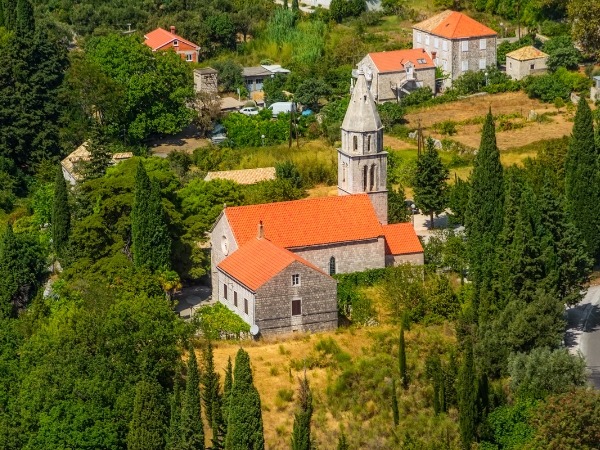
Trsteno Arboretum is a living museum of plants and history, located about 18 kilometres from Dubrovnik in the seaside village of Trsteno. It was founded in the late 15th century by the noble Gučetić family, and it is often cited as the oldest Renaissance arboretum. The estate spans roughly 25 hectares of gardens overlooking the Adriatic, featuring hundreds of exotic plant species gathered over centuries.
Oriental plane trees over 500 years old towering at the entrance. These giants are about 50 metres tall, one of the largest of their kind in Europe. The gardens in Trsteno Arboretum are quiet and shaded. You can wander down pebble pathways flanked by old stone walls, citrus trees, and fragrant Mediterranean herbs. In the heart of the garden lies a Baroque fountain with a statue of Neptune and nymphs, fed by an elegant 70-metre aqueduct built in the 1490s. Lily pads float on the pond at Neptune’s feet. Apart from the formal Renaissance section, parts of the arboretum are delightfully overgrown.
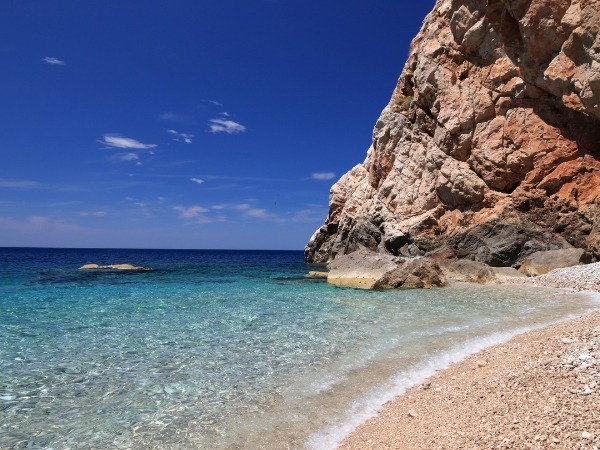
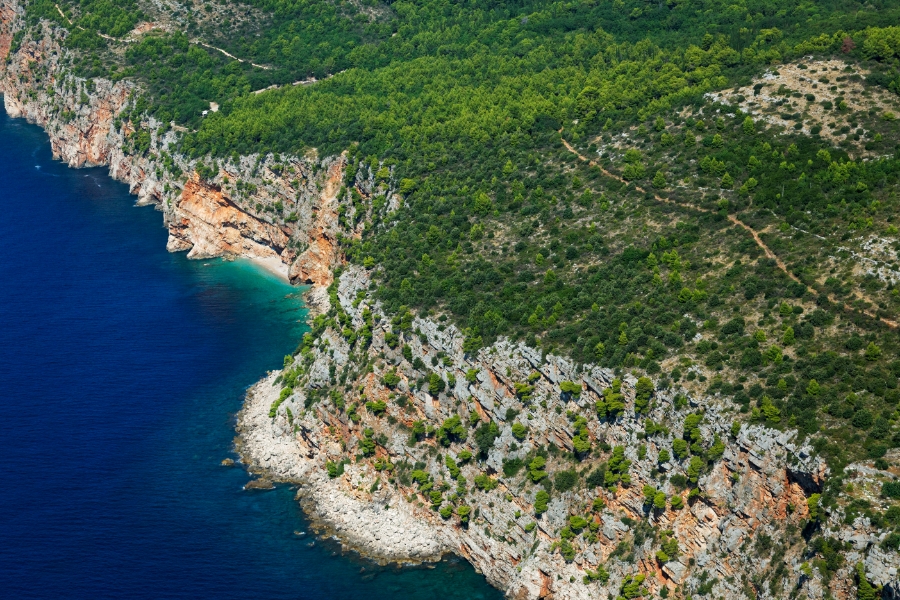
Pasjača Beach is hidden at the foot of towering orange cliffs in Konavle. This cove lies about 30 kilometres south of Dubrovnik near the village of Popovići. Reaching Pasjača requires a bit of effort. You’ll drive through rustic countryside to the cliff’s edge, then follow a steep path and stairway carved into the rock face to descend to the shore. The reward is a natural beach of fine pebbles and sand, lapped by clear turquoise water and enclosed by limestone cliffs.
Pasjača Beach was crowned the “most beautiful hidden beach in Europe” in 2024. Yet despite the accolades, it remains uncrowded. There are no facilities and no large crowds, just the sound of gentle waves and seagulls. The cliffs provide shade in the early morning and late afternoon, while midday brings full sun to the cove’s 80-metre stretch of sand.
Swimming here is fun, as the Adriatic is calm and glassy, with crystal-clear water that shimmers in shades of blue and green. Adventurous visitors can also explore little sea caves and rock pools along the edges of the bay. So, consider bringing snorkelling gear to peek at fish in the rocks.
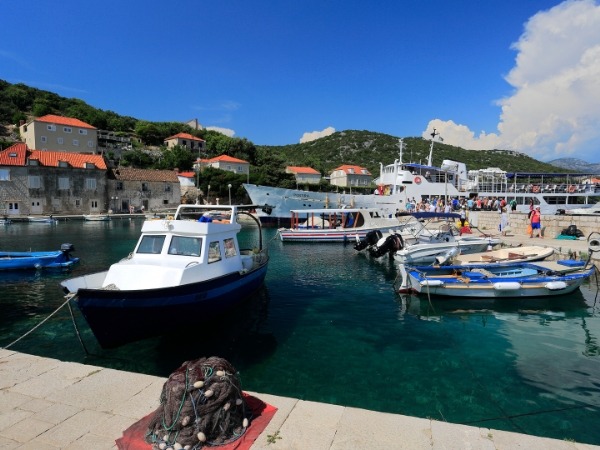
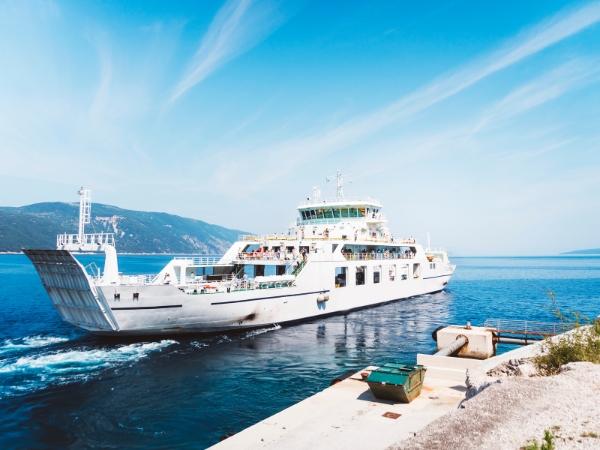
Šipanska Luka is a fishing village on the western end of Šipan Island, the largest of the Elaphiti Islands just offshore from Dubrovnik. To reach this hidden gem, you can take a ferry or boat about an hour from Dubrovnik’s port. Šipan Island hasn’t changed much in decades. It’s a green haven famous for olive groves, vineyards, and rustic charm.
Šipan holds a Guinness World Record for the greatest number of olive trees per square kilometre, a testament to its fertile soil and ancient agricultural tradition. Centuries ago, Dubrovnik’s nobility built summer villas and monasteries on Šipan, and the village of Šipanska Luka became a cherished retreat.
When you arrive at Šipanska Luka, you’ll step into a postcard scene of authentic Croatian island life. The village is little more than a curved waterfront lined with stone houses draped in bougainvillea and rosemary. Fishing boats and sail yachts bob in the small harbour, protected by a surrounding bay and the nearby islet of Jakljan. Walking through the village, you can spot a tiny church, ruins of a Roman villa, and the weathered facades of summer houses of Dubrovnik’s aristocrats.
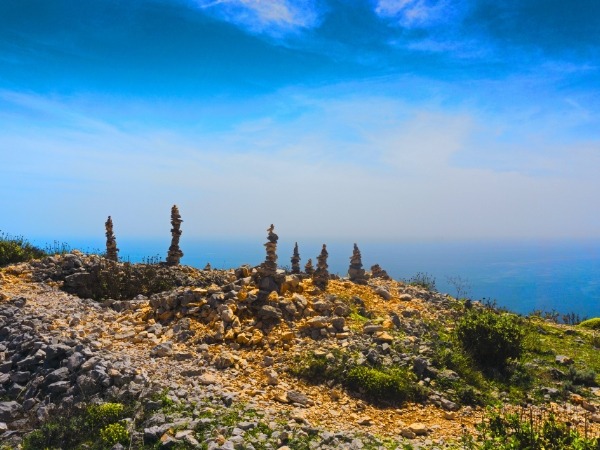
Mount Srđ is the famous hill rising just behind Dubrovnik, known for its panoramic viewpoint over the walled city. While many visitors take the cable car up, driving the backroads of Srđ Hill can be a rewarding adventure. The road to the summit is paved and only about 3 kilometres long, starting from the coastal highway near town. Be prepared because it’s a steep, winding climb. Driving up Srđ takes only around 10 minutes without stopping.
When you reach the top, you’ll be at about 413 metres above sea level, greeted by the enormous stone cross and the old Fort Imperial. This 19th-century fortress was built during the Napoleonic Wars (1806–1816) to guard Dubrovnik. Today, it houses a small museum commemorating the city’s defence in the 1990s war. From the ramparts, you will see terracotta roofs, the bright Adriatic, and the green shapes of nearby islands.
Beyond the busy viewpoint, Srđ has backroads and trails to explore. Consider driving or hiking a bit further inland along the ridge. A narrow country lane leads past the village of Bosanka, a tiny hamlet on Srđ’s plateau with old stone cottages and fig trees. Here, you can experience rural Dubrovnik life, with goats grazing and locals tending small gardens.
The historic trail known as the “Dubrovnik Imperial Road” also extends across the hill, a remnant of the old paths that connected Dubrovnik with its hinterland. When you drive along these backroads, you might find a hidden chapel, or abandoned fortifications. In the golden afternoon light, the limestone crags of Srđ glow, making it one of the quiet places in Dubrovnik to watch a stunning sunset.
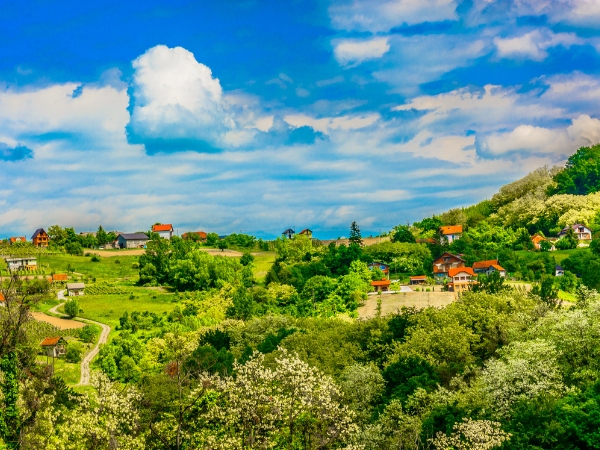
Čilipi is a charming village in the heart of the Konavle region, the rural area south of Dubrovnik, which is about a 30-minute drive from the city. Set among olive groves and vineyards on a gentle plateau, Čilipi boasts a cluster of stone houses, a bell tower of St. Nicholas’ Church, and a main square. Every Sunday from spring through early autumn, Čilipi hosts a lively folklore event that draws visitors who want a taste of authentic Croatian heritage.
After the morning mass, locals are dressed in traditional Konavle costumes. The men in neat vests and caps, the women in elegant embroidered blouses and silk aprons perform kolo dances to the tune of Dalmatian mandolins and lutes. Alongside the performances, there’s often a local market where village women sell handmade lace, embroidered tablecloths, silk scarves, and other handicrafts, so you can pick up a genuinely local souvenir. Adjacent to the square, the Konavle County Museum welcomes visitors into a stone house, displaying traditional furniture, farming tools, and the famous Konavle silk embroidery which adorns folk costumes.
If you visit on a non-event day, you might find the square empty save for a few locals sitting under the mulberry trees. Walk around and you’ll notice how quiet the village is. The surrounding area is ideal for a scenic drive or short hike. Country roads lined with dry-stone walls lead through vineyards and cornfields to other Konavle hamlets. Follow signs to the Ljuta River nearby, where old watermills still stand.
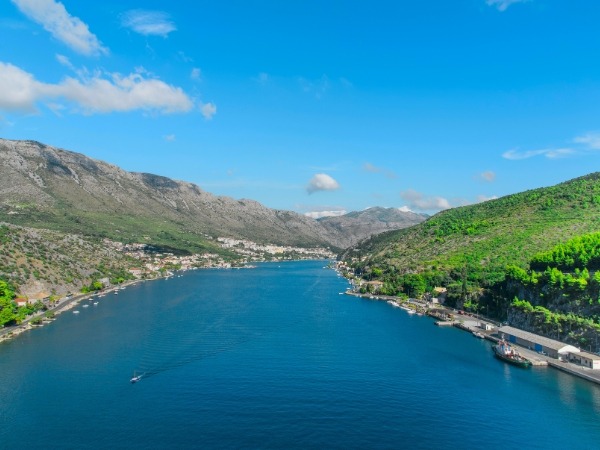
Rijeka Dubrovačka is a scenic fjord-like inlet just north of the city. This quiet part of Dubrovnik is formed by the Ombla River, which holds a special claim to fame. At only about 30 meters long, the Ombla is one of the shortest rivers in the world. It emerges from a powerful karst spring beneath a cliff at a place called Vilina near the village of Komolac and flows just a few dozen metres before merging with the Adriatic Sea in a broad, calm bay.
Despite its short length, the Ombla has been supplying drinking water to Dubrovnik since the 15th century. You’ll even see an old stone aqueduct and pump house by the source. The spring pours out of a cavern and forms a small waterfall. Driving along Rijeka Dubrovačka, you’ll follow a waterfront road that winds between the emerald river and steep hills. The area consists of a string of old settlements of Komolac, Rožat, Mokosica that once served as a countryside escape for Dubrovnik’s nobility.
You can spot elegant summer villas and gardens from the 16th and 17th centuries along the shore. Some were restored, and some are quietly fading under vines. One notable example is the Bunić-Kaboga Villa, a Gothic-Renaissance mansion that has been beautifully renovated and sometimes hosts cultural events. There are also local taverns and cafés by the marina perfect for enjoying a coffee or seafood lunch with a serene view of the river.
Despite being only a 10 to 15 minute drive from Old Town Dubrovnik, it feels worlds away from the tourist buzz. You can stroll on a waterside promenade under palm and cypress trees, watch swans glide on the water, and inhale the fresh river breeze. Upstream, a footpath leads to the Ombla source, which is about an hour’s walk. It’s a mini-hike ending at the cool grotto where the river begins.
Cavtat is located 20 kilometres south of Dubrovnik. The town has about 2,000 residents and curves gently around a turquoise bay. Palm-lined paths and orange roofs reflect in the clear water. Cavtat has very old roots. It was first a Greek and Roman settlement called Epidaurum. When Epidaurum fell in the 7th century, its people moved north and founded Dubrovnik. Cavtat later grew under the Republic of Dubrovnik, and noble families built summer homes here. Today, the town keeps its historic charm but feels much calmer than Dubrovnik.
Cavtat’s Old Harbour feels peaceful the moment you arrive. Yachts and small fishing boats move on the calm water. Cafes place tables under palm and pine trees along the quay. It is a pleasant place to enjoy coffee or gelato. The scene looks like a postcard. One end has the 16th-century St. Nicholas Church and a Renaissance rector’s palace, which now holds a gallery.
The other end curves into a wooded peninsula with a coastal path. This trail has swimming spots and views back toward the town. You can spend a full day here. There are small museums, shops, and quiet corners. The town also has a few pebbly beaches with clear sea. Cavtat was named a top European honeymoon spot in recent years. If you enjoy short hikes, follow the hill trail to the Racić family mausoleum. This white cupola structure by Ivan Meštrović looks over Cavtat and the blue Adriatic.
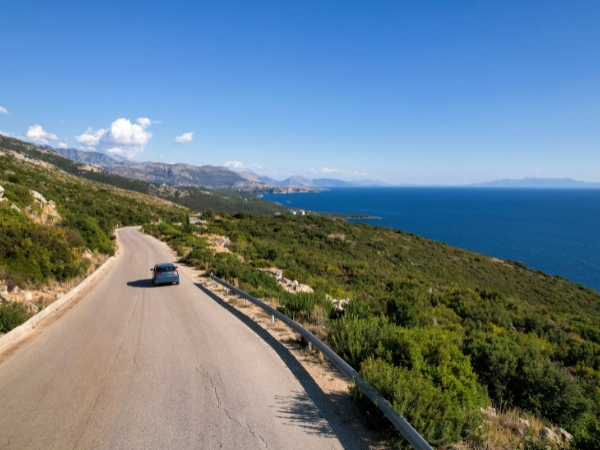
Exploring Dubrovnik’s lesser-known areas by car shows how much the region offers outside the Old Town core. Buses do not always match your schedule, and some routes are limited. With changing road levels, winding coastal lanes, and long distances between stops, driving yourself becomes the most practical way to reach quiet beaches, rural plateaus, and high viewpoints.
This is where renting a car in Dubrovnik with Final Rentals becomes practical. Final Rentals offers clear pricing, fast booking, and instant confirmation to reduce planning delays. You can pick up your vehicle at Dubrovnik Airport and follow a simple four-step system. Search by location, choose a car suited for coastal or countryside routes, enter your details, and receive your voucher. For extra convenience, you can also download the Final Rentals app on Google Play and the App Store.